Tuesday, March 24, 2020

The rhythm of the lectionary


                We need some balance in our lives right now. We need some continuity in our lives right now.
                Hebrews 13:8 says that “Jesus Christ is the same yesterday and today and forever.”
                That is a verse we all need in times like this. Knowing that in an upside down out of control world that God is still His always right side up in control Self.
                I would encourage you to hang on to that verse, especially in the week ahead.
                And I want to give you another unchanging resource as well.
                The lectionary.
                Vanderbilt Divinity Library defines the lectionary in this way:

The Revised Common Lectionary is a three-year cycle of weekly lections used to varying degrees by the vast majority of mainline Protestant churches in Canada and the United States. The RCL is built around the seasons of the Church Year, and includes four lections for each Sunday, as well as additional readings for major feast days. During most of the year, the lections are: a reading from the Hebrew Bible, a Psalm, a reading from the Epistles, and a Gospel reading. During the season of Easter, the Hebrew Bible lection is usually replaced with one from the Acts of the Apostles. The lections from the Hebrew Bible are sometimes chosen from the Apocrypha.

The seasons of the Church Year reflect the life of Christ. Consequently, the gospel lections for each Sunday provide the focus for that day. The other lections for a given day generally have a thematic relationship to the gospel reading for that day, although this is not always the case. In Ordinary Time, the Revised Common Lectionary offers two sets of readings for the lessons from the Hebrew Bible. One set proceeds mostly continuously, giving the story of the Patriarchs and the Exodus in Year A, the monarchial narratives in Year B, and readings from the Prophets in Year C. In the other set of readings for Ordinary Time, the readings from the Hebrew Bible are thematically related to the gospel lections. Denominations or local churches generally use either the semicontinuous readings or the thematic readings during Ordinary Time. They do not typically move back and forth between the two over the course of a single season.

The gospel readings for each year come from one of the synoptic gospels according to the following pattern:

Year A - Matthew
Year B - Mark
Year C - Luke
Readings from the Gospel of John can be found throughout the RCL.[i]

So, basically the lectionary is a set of daily Scripture readings, from the Old Testament, from the Gospel, from the Psalms, and from an Epistle (basically Acts-Revelation). I wanted to share all this today because I find the lectionary to be a gift of comfort amid the craziness of the world, especially right now. The lectionary, in conjunction with our church calendar, give us a rhythm and routine to life and worship, and that the two are always connected.
A few years ago I started beginning every day with a reading from the Psalms. Then I incorporated the daily lectionary reading in as well, Old Testament and New Testament. And in this ancient scriptural practice I found a beautiful routine that was comforting, not boring, routine, but not regular.
For me, the lectionary calendar provides a routine that I desperately need.
In my first appointment I came thinking of all the ways that we could change up the worship service, from the music to where I preached from, even to the bulletins and the order of worship. I wanted to make sure that no one was too “comfortable”, which I assumed then would lead to “complacent”. As I sat one afternoon and talked to a recently widowed church member, she said these words, “I can’t wait to get back to church. My life is so out of control right now. At least in church I know what to expect. I know what comes next.”
What to expect.
What comes next.
Those are things that we want now, also, I think.
Her words have stuck with me. I didn’t need to change up an order of worship, there is something important, there is something comforting, in knowing what comes next.
As I sit here this morning writing these words I am looking out my window, and I can’t see past the road at the end of my yard. I know that there are trees on the other side of the road. I know that Willie and Barbara live just to the left. But I can’t see anything past my yard. It doesn’t mean that the trees and the Gehlen’s house is not there anymore, just because I can’t see it. It just means that right now there is something blocking the view for me.
The lectionary is kind of like this for me. I can’t see everything that will happen, and that’s ok. I can see what I need to see, and I know, at least for this moment, what will come next.
I want to encourage you, as we are in this unique time in our lives, to engage in the lectionary with me. I have posted links to both the daily readings (we are in Year A right now), and the Sunday readings, on our Telford United Methodist Church website under the “Ministries” tab (https://webtelfordunitedme.wixsite.com/mysite/ministries-1)
You can even click here to import all of these readings directly into your online calendar!! https://lectionary.library.vanderbilt.edu/calendar.php

I hope that the lectionary can be a gift of comfort to you during these days and weeks ahead. And know that there are so many others around the world reading the same Scripture with you today.
And if you haven’t done this yet, you can also sign up to receive a daily devotional email based on the Scripture readings from the lectionary directly from members of our Holston Conference. You can sign up to get this daily email here: https://list.robly.com/subscribe?a=86212b741523f9e41a9d3b61c1c0c05a

Things are different. And they will continue to be. But our God is the same, always and forever. In the midst of the changing landscape of the world we live in, know that God’s promises to you in Scripture, His love shown to you in Jesus, and His presence with you in the Holy Spirit, remains unchangeable and eternal.
Rest in that knowledge. Be comforted in that truth. And engage in a routine with the Lord that brings you closer to Him.

Grace & Peace,
Pastor Michael


For those interested, here is my “normal” routine for engaging with the lectionary readings:
1.       Read a Psalm (actually right now I am not reading the recommended Psalm for the day, I am reading through the Psalter in order again, from Psalm 1 to Psalm 150. Sometimes I break up the longer Psalms into more than one day, do whatever you feel God leading you to).
2.       Read the New Testament passage
3.       Read the Old Testament passage
4.       Read a brief devotional (Sometimes I use the Upper Room, or sometimes the Holston Conference email devotional that is listed above—I like this because it goes along with the Scripture I just read. Right now I am reading this book, https://www.amazon.com/Library-Lewis-Selections-Influenced-Spiritual/dp/0307730824, which is a collection of short quotes from some of the writers who influenced CS Lewis.) There are also thousands of devotions through your Youversion Bible app.
5.       Prayer (I keep a prayer journal of prayer requests, what I am thankful for, supplications of others), I begin with the Lord’s Prayer because that helps center me

There is no right or wrong way here, and this structure works for me right now, but will change perhaps as I continue to mature and change as well. Find what works for you where you are right now in your relationship with God. W

We will get through this because God is with us. Take precautions, stay home if you can, follow the health and safety guidelines, and engage with your Father. He’s waiting….


[i] https://lectionary.library.vanderbilt.edu/faq2.php

Tuesday, March 17, 2020

All will be well---so give up


As I am writing this devotion we are still in the season of Lent. Lent is the 40 day period (not counting Sunday’s) that is from Ash Wednesday to Easter. This year that means Lent began on February 26 and ends on April 11.
            Lent is a beautiful gift of preparation, of self-denial and reflection. Lent is also a time that many people choose to give up something, or pick up a new something in their life, with the hope and expectation that this 40 day period will be a time that they draw closer to God.
            I have given up many material things during Lent over the years. One year I gave up Mtn. Dew (and I still haven’t drank one since), one year I gave up meat (and then ate an entire bag of beef jerky right after the Easter worship service—thanks Bob Fletcher!). Giving up things for a period of time is good for us.
            And yet as I am writing this devotion there is so much more going on in the world than just Lent. And yet, Lent is still here, among us, even as we are in the midst of so much today.
            In the past couple of weeks we have been asked to give up many things. Not just Christians giving up chocolate or Mtn. Dew’s for Lent, but as humans giving up things for the benefit and well-being of other humans amid a global pandemic.
            We have been asked to give up some travel. Stay home.
            We have been asked to give up some eating out. Stay home.
            We have been asked to give up meeting together in church sanctuaries. Stay home.
            We have been asked to give up gathering in groups. Stay home.
            We have been asked to give up being in physical contact with others, and we have even been asked to maintain distance between others.
            We have been told to clean, wash, disinfect. Things that are always a good idea, just saying.
            And as we have been told to give up these things for a while, I watched the fear and anxiety increase through the news on TV, and even in my neighborhood. Just walk down the toilet paper aisle at Wal-Mart, or try to find bleach at Dollar General, or bread at Food City, and you see firsthand our human reaction.
            In the giving up of these things, some people have picked up many other things. Fear, worry, anxiety. And it’s no wonder. When all you hear is the media outlets, the social media hysteria, and the doomsday prophecies there is little room for anything else.
            So how about right now, right in the heart of the Lenten season, we just go ahead and give up. We’ve been giving up many other things anyway, so why not give up a few more things today?
            Give up fear.
                        “The Lord is my light and my salvation— whom shall I fear? The Lord is the stronghold of my life— of whom shall I be afraid?”--Psalm 27:1
            Give up worry.
                        “Therefore I tell you, do not worry about your life, what you will eat or drink; or about your body, what you will wear. Is not life more than food, and the body more than clothes? Look at the birds of the air; they do not sow or reap or store away in barns, and yet your heavenly Father feeds them. Are you not much more valuable than they? Can any one of you by worrying add a single hour to your life?”—Matthew 6:25-27
            Give up anxiety.
                        “Cast all your anxiety on him because he cares for you.”—1 Peter 5:7
            Give up hoarding.
                        “The generous will themselves be blessed, for they share their food with the poor.”—Proverbs 22:19
            Give up running.
                        “Be still and know that I am God”—Psalm 46:10
            Give up control.
                        “Then he went a short distance farther and fell on his face and prayed, “My Father, if it’s possible, take this cup of suffering away from me. However—not what I want but what you want.”—Matthew 26:39
            God has got this. He’s got the whole world in His hands. And He loves you and cares for you. Be strong in Him, be courageous as a child of the Most High God. Do not fear and do not worry. For God is with you. God is with us. And it is well.
            “All shall be well, and all shall be well, and all manner of thing shall be well” (Julian of Norwich, Revelations of Divine Love).

Tuesday, February 11, 2020

PORCH


            June of 2019 the Holston Annual Conference received an offering of $129,733 to fight the opioid addiction epidemic in our conference. This money is being distributed to area churches to implement new addiction recovery programs, and to re-engage in existing ministries. I want to applaud these ministries, the people who are working countless hours behind the scenes to keep them going, and each person who is seeking treatment. There are wonderful things happening in our conference, and this is just one more reason I am #HolstonProud.
            Unfortunately, there is so much more needed as we battle addiction in our communities, our neighborhoods, our churches, and our families. $129,733 is a great start, but how much is needed to really make a difference?
            What about the families of addicts who don’t know where to turn or what to do? How much money do we need to help them and support them?
            This has been a topic of conversation in one of the churches I serve, Telford United Methodist Church. And from these conversations, from listening to one another and seeking to follow the voice of God, PORCH emerged as a ministry for those affected by addiction of loved ones.
Here is how Donna Alexander, the creator and facilitator of the Telford UMC PORCH group, explains this ministry to those affected by addiction in our church.

            “Chuck (Donna’s husband) and I knew that God would call us to where He wanted us to be as soon as we settled in here in Jonesborough.  He led us to Telford UMC, pulling us to the doors there.  Once we walked through that front door, we knew we were home.  And before long, our front porch became a place where neighbors, strangers passing by and friends we made here felt welcome and comfortable to sit and chat.  Many left saying they felt unburdened after sitting and talking about things they never discussed or shared with any one before.
It was clear that God was leading us to a new mission.  Several Sundays in church, members of the congregation would take us aside and say that they felt led to talk to us about some things in their lives.  God had been preparing our lives all along since childhood to be observers, listeners, comforters and nonjudgmental.  After all, we had seen it all in our own families and friends and we loved them even so.  Perhaps we loved them even MORE.   
One day when speaking with a woman in our church, I was extremely moved by what she shared about addiction in her family.  She thanked me for listening.  She said it helped so much.  I took that home that Sunday and prayed for her and for how I might be helpful to her.  God said, “You listened”...it's enough.  I understood what I could do.  I could listen.  So, I called this woman and asked if she thought it would be helpful to her to get together with others who might have similar issues in their lives...to talk and listen to each other.  She yelled through the phone an emphatic and LOUD “YES, OH YES”. 
So began our get-togethers on Monday evenings in our home.  At first it was just for women who were affected in any way by addiction of a loved one.  But, within two weeks, men were asking if they might attend as well. 
Though there is a scheduling nightmare at times, the group has made a difference in people's lives.  Families are opening the lines of communication, making plans to seek professional help, feeling that they are not alone in their journey. 
We gather now on the 1st & 3rd Mondays at our home, bringing a dish to pass so that we might share an informal meal together as a family of God.  We pray for God's guidance and thank Him for this opportunity to be a FRAMILY (a Telford term of blended ‘family’ and ‘friends’).  We listen and we sometimes cry together and rejoice together as we see progress being made.  We set boundaries to protect ourselves from those who would try to bring blame to the blameless in the cycle of addiction. 
In searching for a name for our group, I was sitting on our porch one afternoon and a neighbor stopped by.  We sat and chatted (I mostly listened). When she left, she commented that our porch was inviting and such a comfortable place to feel welcome and loved.  When she left I looked down at the sheet of paper on which I had been scribbling ideas for a name for our group.  PORCH would be perfect I thought.  People Offering Real Christian Help/Hope!”

Money is necessary for ministry. But what has struck me is how lives are being impacted through relationships and…listening. There are many other recovery programs that are needed in our communities, but I wonder if the PORCH model might not be a way to embrace those friends and family members who are feeling isolated, alone, and hurt by addiction of their loved ones.
Perhaps the front PORCH could be extended by other churches as a place of welcome, and rest. A place to cry. A place to scream. A place to laugh. A real place to live and love together in community.
If you would like more info on PORCH, or ideas to facilitate a group in your church, please call us. Or better yet, come on over and sit on the PORCH, and let’s talk.


Monday, January 20, 2020

You are Kind. You are smart. You are important.


“You is kind. You is smart. You is important.”
Those words are spoken by a woman to a child in the movie, The Help. I don’t normally recommend movies, but this is one that I think everyone should see. What I find interesting, and applicable, is that this scene carries on throughout the movie. Those six words were repeated to this little girl as she grew up, and helped shape her understanding of herself as she moved into adulthood. I think this important because throughout your life you will have voices speaking to you, telling you who you are. And when those voices do not match up with the truth of God’s Word, then you know they are a lie. But to know the difference, you must know what God says about you, so that you can discern the truth from the lies. It also helps if you listen regularly to God, so that you can begin to know the sound of His voice amongst all the other voices throughout life (see what Jesus had to say about this in John 10:27-29).
Coming to know and understand who you are “in” Christ is a lifelong process. It takes that time to know that you are loved. You are redeemed. You are forgiven. You are an heir. You are invited into relationship with God. You are a new creation.
One of my favorite pictures of who we are is found in 1 Corinthians 12:27, where the apostle Paul writes, “Now you are the body of Christ, and each one of you is part of it”. I love this because this is a reminder that while we find our identity “in” Christ, we find our purpose, “in” the body, among other people. Not in isolation. Not alone. But in community.
Take some time to read this section of 1 Corinthians this week (1 Corinthians 12:12-27 and Ephesians 4:1-6 both refer to this metaphor of the “church”, the gathered together community of believers, as a “body”). I have been thinking about this a lot lately, this body metaphor. We are all connected. We are all part of something bigger than ourselves, or the building where we worship on Sunday mornings, or even the denomination that we are part of. The body is not the Body of the United Methodists, or the Body of the Baptists, or the Body of the Presbyterians, or the Body of the Catholics, or anything else. It is the Body of…Christ!
And YOU are part of this, and so am I. And we have work to do, together. Because it’s not about the foot, or the hand, or the eye, or the mouth, or the thyroid, or the fingernail, or the arm pit hair. These are all parts of the body, and every part is important. Every part is needed.
And the Body only functions if each part does its job to benefit the body. That’s why Paul said if one part of the body suffers, then the whole body suffers. If you’ve ever broken a bone, then you know that break affects all the rest of your body. If your toe is broken, the rest of your foot doesn’t say, “well, it’s just a toe. It’s not that big of deal, it doesn’t’ affect me because I’ve got four more”. No! A broken toe hurts all the way up to the top of your head, because if one part suffers the whole body suffers. And that’s the point Paul was making for us all as Christians, that if any one part is suffering, then we all suffer together. And if any one part rejoices, then we all rejoice and celebrate together.
Because we are all connected. Not by denominational standards or social constructs. We are connected because Jesus is the head of the Body and we are all members of it with a job to do. You are invaluable to the Body because God made you to be part of it, to be in community with other parts, and to do a job for the overall well-being of the Body. Maybe your job is visible, like the foot, or the mouth, or maybe your job is not as noticeable on the surface, like the thyroid, or the uvula. But every part is important, because every part is created by God with a plan and a purpose. Every part is a unique and every member is a loved child of God.
            And that’s who you are.
            You are kind. You are smart. You are important.

Monday, January 6, 2020

Jesus in the Middle


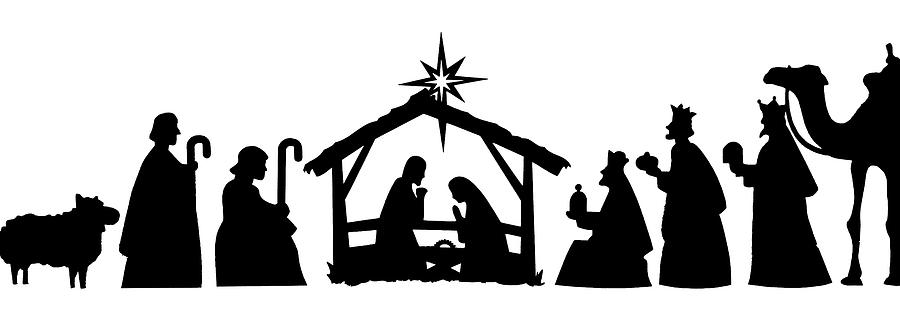
              Last week was Epiphany Sunday. And in the churches I serve this is a day that, in part, we remember the journey of the magi’s quest to search for the Christ-child, the One born “King of the Jews”. The story is told in the second chapter of Matthew’s gospel, and is as familiar to us as the shepherds and the manger as part of Jesus’ birth.
            And yet the magi would have arrived a year or two after Jesus was born, so Jesus was toddler at the time these Gentile gift-bearers arrived at the house in Bethlehem. And yet most all of our modern nativity sets include these three men, even though Matthew never says how many magi there were, just that three of the gifts that they brought included gold, frankincense, and myrrh. I don’t say this to crush your Christmas image of shepherds and wise men hanging out in the stable while the little drummer played his drum and cattle lowed and baby Jesus slept quietly under the star lit sky.
            In fact, I love the image of shepherds and magi together in the same place. Even though perhaps that’s not historically accurate, I believe it is theologically accurate.
 Image result for nativity silhouette
                                                     (Image Photo by Minr Alawi)                                                                                         
           On the one side are the shepherds. They were probably Jewish born men who worked a hard job and weren’t exactly the socially accepted. They spent their days and nights in the fields, caring for sheep. And also selecting sheep to be taken to the priests to be examined for defects and blemishes. The perfect sheep were used in the sacrifices. So these Jewish men knew about sheep, and sheep “without spot or blemish”, and sacrifices, and about what being a “good shepherd” looed like in day-in day-out life.
            And on the other side are the magi. These men are not Jewish, which means they are what the Bible refers to as “gentiles”, which is basically anyone who is not Jewish born or a Jewish convert (proselyte). They come from somewhere around Persia and travelled hundreds and hundreds of miles over a period of months because of “star” they saw that they believed heralded the birth of a Jewish king. The word that Matthew uses to refer to these men, “magi”, is where we get our English word “magician” from. And as cool as David Copperfield and Criss Angel are to watch on TV, the Bible never refers to magicians in a positive light. These men are not worshippers of the One True God by birth or by confirmation. They knew about the Scriptures that foretold of this coming Messiah, and the prophecy that a unique star would herald his birth, and so when they saw something unique and out of the ordinary, they followed it.
           The shepherds were told by angels. The magi were told by a star. And both groups made their journey to Jesus.
           On one side shepherds, and on the other side magi. On one side Jewish blue collar economically poor sheepherders. On the other side horoscope reading-star gazing gentile alchemists. And in the middle, Jesus.
         That’s why I love the nativity. All of the unique diversity there. All these people coming from different backgrounds are there. And the One who brings both sides together, the One who bridges the gap between them and proves that what they have in common is greater than any differences that they have, is Jesus.
        And if this is true of shepherds and magi in 1st century Israel, I wonder could this still be true for us today as well? As we continue our journey to Jesus, perhaps it is in seeing Jesus in the middle of all things, then we might then see the wide variety of others who have been journeying to Him as well.
      

Saturday, January 4, 2020

Nothing Has Changed--a Pastoral Letter from Michael on the State of the Church before General Conference 2020

Apparently our United Methodist Church is in the news alot lately. That's not unusual. When disaster strikes an area in the forms of hurricanes, tornadoes, or flooding it is UMCOR (United Methodist Committee on Relief) that is one of the first responders on the ground to be offering help and hope to those affected. When there is a crisis in a small town or a big city it is United Methodist pastors and laity who are among the first to reach out and offer support. When there are tough issues to be addressed with love and compassion, it is the members of United Methodist Churches around the world who step and do what needs to be done.

I love my church.

But our latest stints on national and local news channels are not for any of these wonderful things. It is not for our unity, it is our division. I would like to thank my youngest daughter's boyfriend for letting me know about this CNN article:
https://www.cnn.com/2020/01/03/us/united-methodist-church-split-proposal/index.html
And there are more like this, just Google "UMC split".

Since there has been a resurgance lately on this topic of the UMC splitting up, or dissolving completely, all because of our seeming dis-unity on this one topic, I felt the need to offer my input on this as your pastor.

Nothing has changed.
Let me say that again, nothing has changed.

Yes, our General Conference meets this coming May (for more info on what "General Conference" is read this: https://www.umc.org/en/content/general-conference). And in that meeting the delegates from around the world will once again discuss and vote on the United Methodist Church stance on homosexuality, same sex weddings in UM church buildings, and the ordination of gay clergy candidates, just as has been topics of General Conference every 4 years since 1972.

Our current stance is that same sex weddings can not be conducted in our churches or officiated by UM clergy, and that gay persons can not be appointed as UM pastors. For a full statement on the United Methodist Church doctrinal position from our Book of Discipline read this: https://www.umc.org/en/content/what-is-the-denominations-position-on-homosexuality

There are several different petitions that will be presented to the delgates of General Conference to vote on this May, and most of them involve some sort of split in the church. While this breaks my heart, I am beginning to understand. I know pastors and laity whom I love who support the full inclusion of all LGBTQ+ peoples in the life of the church. I know these people love Jesus and love the Church. And I know pastors and laity who I love and believe that homosexuality is not God's plan for his creation and believe that tehe current doctrinal statement of the church in this regard is accurate and biblical truth. I know these people love Jesus and love the Church.

And yet there is a divide among us. I have been OK with this for years. There are plenty of things we all don't completly agree on as United Methodist Christians.
What happens at the moment of death? I know some UM's who believe that immediately at death you are either in heaven or hell. I know some UM's who believe that you sleep until Jesus returns.
Or what about the "rapture"? I know some UM's who believe that one day some people will vanish from this earth, being taken on to heaven while there will be others who will be "left behind". I know other UM's who believe that to be "taken" is a bad thing, and to be "left" is actually good, since the context of this passage is Jesus talking about the flood in the days of Noah.
My point is that there are many important things that we disagree on, yet we have remained "United".

In May at General Conference is it possible that the decision of the voting delegates will be to seperate in some way. And at this point maybe that wouldn't be so awful. Months ago I would have said we should stay together at all cost. But if the cost is our Christian witness, if the cost is that we are spending millions of dollars on this one topic at the expense of being the Church in the world offering hope and reconciliation to those in need, then the cost might be too high.

But here's what I know for sure today:
Nothing has changed.
Let me say that again, nothing has changed!

We are still the United Methodist Church. Sure, there might be a vote to split in May. There might be a vote to dissolve in May. There might be a vote to remain the same in May. Jesus might even come back before May 2020 and all this won't even matter!!

But if He doesn't, and if we come into General Conference 2020 and votes are imminent, then my prayer is that we vote in love, and that we vote in truth. And if we must part ways (and even Paul and Barnabus felt they could reach more people if they split up--https://www.biblegateway.com/passage/?search=Acts+15%3A36-41&version=NIV) then we do so graciously and know that we will be spending eternity together.

If you declare with your mouth, "Jesus is Lord," and believe in your heart that God raised him from the dead, you will be saved.- Romans 10:9

Telford United Methodist Church and Asbury United Methodist Church will have meetings scheduled after General Conference takes place, and before our Holston Annual Conference in June. I will help keep you up to date on what is happening, and offer space for you to share your thoughts as well. 

But until then I would like to remind you of one thing:
Nothing has changed.
Let me say that again, nothing has changed!

And let me leave you with this, one of my favorite passages of Scripture:

Image result for do not be anxious
Grace & Peace,
Pastor Michael


Monday, November 25, 2019

Divine Interruptions


It’s December. And things are gonna get busy. And that’s good. I have some wonderful things planned on my calendar for this month. Lots of church activities, most of my children coming home for the holidays, parades, and decorating, and parties.
            Of course we have extra Advent and Christmas worships services planned in the two churches I serve as well. December is busy.
            But in all the business and caroling and coming and going this month, don’t miss the people. Jesus never did, even when things got crazy busy in His life. People are the reason He came in the first place, so people were always at the core of what He did.
            This intentional people focus carried over (at least initially) into the earliest ministries of the apostles. One of my favorite healing stories in the Bible is found in Acts 3:1-10. The story is that Peter and John were going to the temple at 3PM (a designated time of prayer) and they come upon a man who is lame laying at one of temple gates begging for money. He had the modern day equivalent of his cardboard sign with his ailments listed, and Styrofoam cup for change to be dropped in. And the people kept passing by, maybe a few dropped a coin into his cup. This was his life, day in day out, day after day. Laying there because he couldn’t get up. Laying outside the temple because he wasn’t allowed to go in. Laying there asking for money because that’s what he thought he needed. Laying at a gate called “Beautiful”, even though his situation in life was far from it.
            And then “one day” (verse 1) everything changed. One day that seemed like it would be just like any other day. Just another day of begging from people as they were headed into the temple. Just another day of being carried to the temple, then being carried back home. But this “one day” would be like no other day.
            “Peter looked straight at him, as did John” (3:4). I love that intentionality, Peter and John looked at him. Maybe you’re thinking, ‘well, of course they did, they saw him so they had to look at him’. But I wonder how often we over look other people. Maybe it’s not even intentional, though at times I believe we do choose to look away from the cardboard holding-Styrofoam cup beggars that we walk by. Jesus always saw the people, seeing their needs, and having compassion on them in love. And so Peter and John really “sees” this unnamed man at the temple gate. And they stop. While all the other people stroll on by, Peter and John stop and look straight at him. I love this because it’s an interruption to what Peter and John had scheduled. They’re on their way to church. Most people I know don’t want any interruptions in life, especially when they’re on their way to church (usually because they’re already running late!).
            Be aware of the divine interruptions God gives you this month.
            And so after offering this man healing in the name of Jesus, Peter took “him by the right hand and helped him up” (3:7).

            I know that it was the healing work of Jesus that allowed this man to walk again. But Peter helped him up, and then after being helped up, “the man’s feet and ankles became strong” (3:7).
            This month maybe we can look for the interruptions in our regularly scheduled activities as opportunities rather than distractions. Perhaps we could focus on seeing all the people as Jesus sees us, and when a divine interruption presents itself, maybe we could help someone up by reaching out our hand and taking their hand in ours. I think that’s a beautiful image of what the church is called to be, an image of who we are called to be; trusting God, looking for opportunities to share His love and grace, and helping others up who don’t even know that they can stand on their own yet.